CHAMPAGNE JEAN-PHILIPPE TROUSSET
THE GUILLEMARTS, AN ANCESTRAL HERITAGE
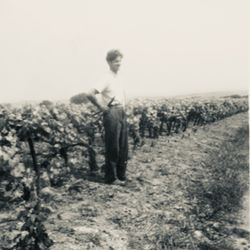
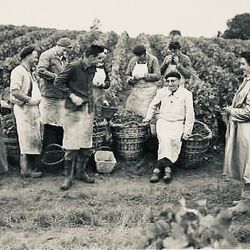
In 1697, the civil registry records show that Nicolas, known as "le Jeune", was the first of the Guillemart family to work as a winegrower in Sacy. From that date onwards, their involvement in this profession continued unabated. After her father was killed in the war in 1940 and her mother died of an illness in 1942, France Guillemart was orphaned at the age of 5.
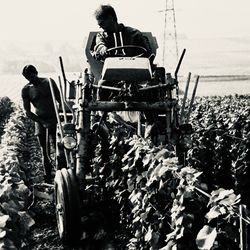
She was brought up under the benevolent care of her grandparents, uncles and aunts until 1956, when she married Mr Jackie Trousset and inherited 2.2 hectares of vines. In 1958, the couple decided to give the estate a new lease of life under the TROUSSET-GUILLEMART brand. In 1960, they marketed their first 2,000 bottles by joining a cooperative system (cooperative harvester). Subsequently, they set about modernising the working tools and developing sales.
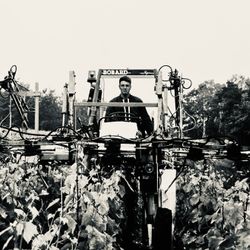
It was only natural that Jean-Philippe Trousset should learn his trade and take over the family business in 1988. In 1992, he took over the management. In 2008, he became an independent winemaker and opened a site (pressing, vat room, cellar and production). His philosophy is to work with respect for the environment and to preserve the life of the soil.
Jean-Philippe TROUSSET is particularly scrupulous in his work.
AN ESTATE ON A HUMAN SCALE
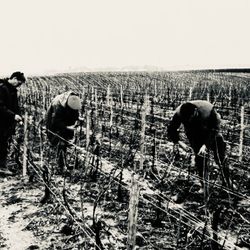
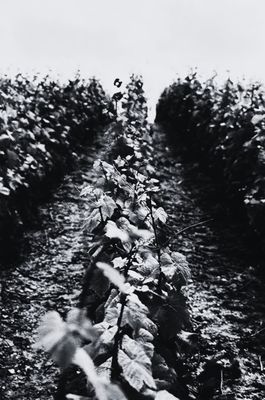
The estate now covers 7.6 hectares spread over three communes classified as Premier Cru on the Petite Montagne de Reims.
Geographically, they are distributed as follows:
- 3 plots in Les Mesneux
- 30 plots in Sacy
- 6 plots in Villedommange
- 1 parcel at Gueux
Our vineyard, on a human scale, allows us to devote ourselves fully to our passion for wine. We are privileged to be able to closely follow every stage of the process, from growing the vines through to bottling and vinification. This close relationship with our terroir and our vines enables us to make informed decisions, tailored to the specific characteristics of each plot.
CURRENT SOILS AND GRAPE VARIETIES
SOILS
Our soils are mainly silt and clay-limestone.
The subsoil of the Champagne region has many characteristics that have a direct influence on Champagne.
The nature of the subsoil has guided the selection of grape varieties for the Champagne terroir.
THE PLOTS
Depending on their nature, the plots are planted with the trilogy of grape varieties that have made the reputation of Champagne's vineyards.
Pinot Noir produces a full-bodied wine that ages well.
Meunier gives Champagne a certain suppleness, but one that develops fairly quickly.
Finally, Chardonnay, the white grape variety, confers delicacy, lightness and liveliness.
%
%
Champagne Jean-Philippe Trousset.
Maison familiale de tradition Champenoise produisant des Champagnes de qualité avec une élégance incomparable
About
- Route de Villedommange Bâtiment isolé RD651370 LES MESNEUX
- contact@champagnetrousset.fr
- 06 16 70 32 66